The Digital Workforce Pillar
An Agentforce consulting partner for AI agents that do real work
Salesforce Agentforce consulting, implementation, and managed services from certified Agentforce consultants — this page is everything we know about putting agents to work, in one place: what they actually do, the platform they run on, the surfaces where people meet them, the governance that makes them safe, and the delivery discipline that makes them succeed. One conviction runs through it: protect what comes next by fixing the Salesforce foundation your agents will depend on. Read it all before you talk to anyone — including us. That's the point.
What Agentforce is — and how it works
The GuideOur Salesforce AI consulting practice covers the full arc — Agentforce implementation services for the first pilot, agent design and guardrails at scale, and Agentforce managed services for the tuning that never stops.
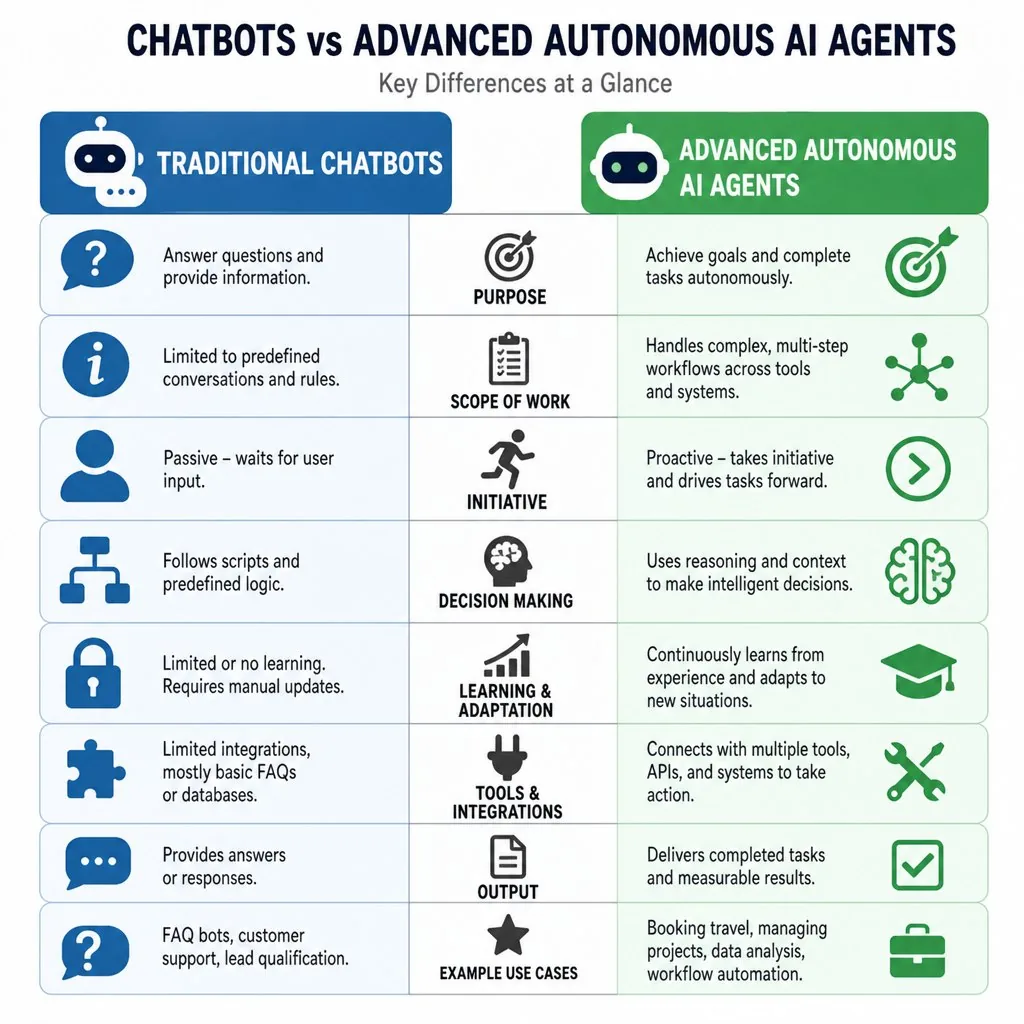
Agentforce is Salesforce's platform for autonomous AI agents — software workers that plan and execute tasks rather than merely suggesting text. Agents run on the Atlas Reasoning Engine (plan → evaluate → refine), are grounded in your Salesforce and Data 360 data, act only through explicitly granted actions and permissions, and escalate to humans with full context when they shouldn't proceed. Salesforce reports 66% of service organizations now run AI agents, with 70% of adopters seeing measurable value within 60 days — and, at Reddit, 46% case deflection with response times falling from 8.9 to 1.4 minutes.
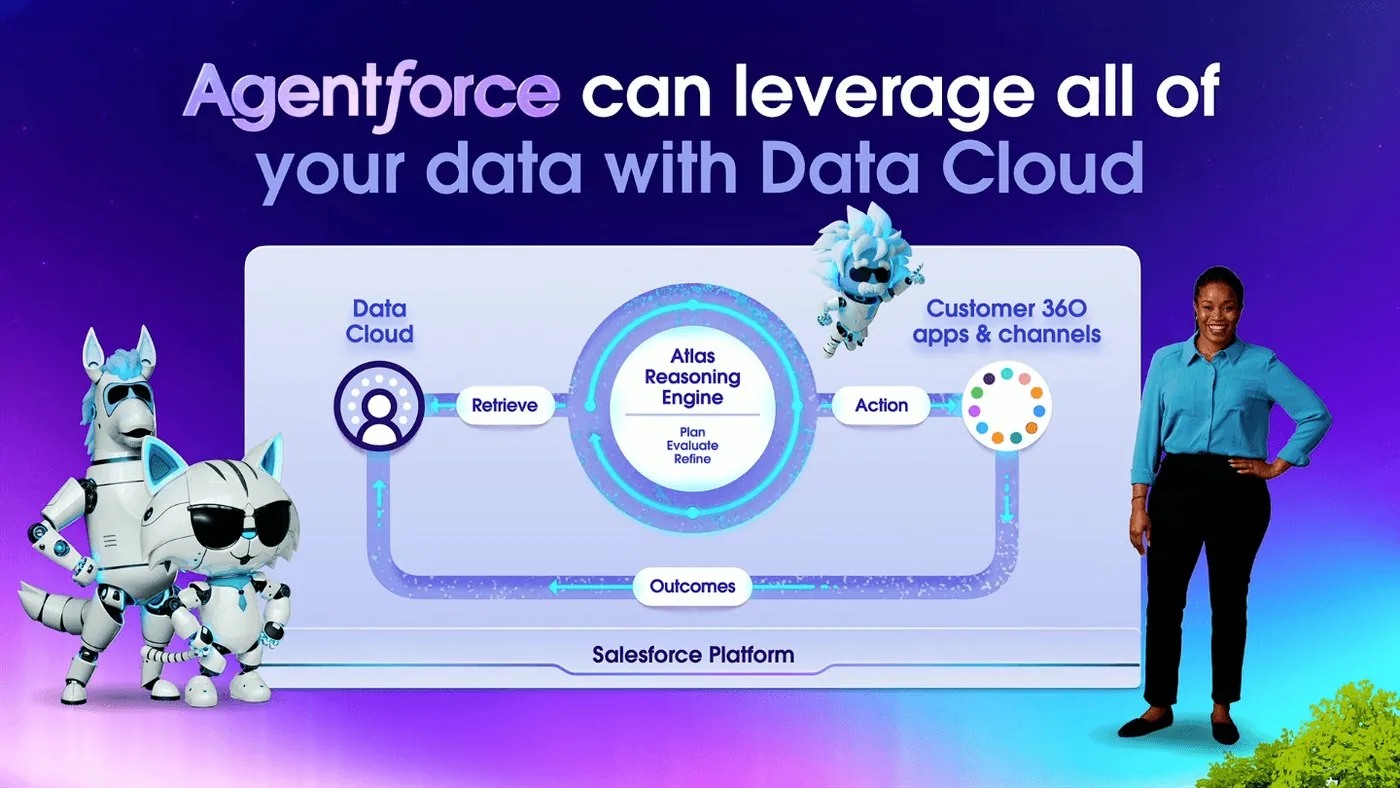
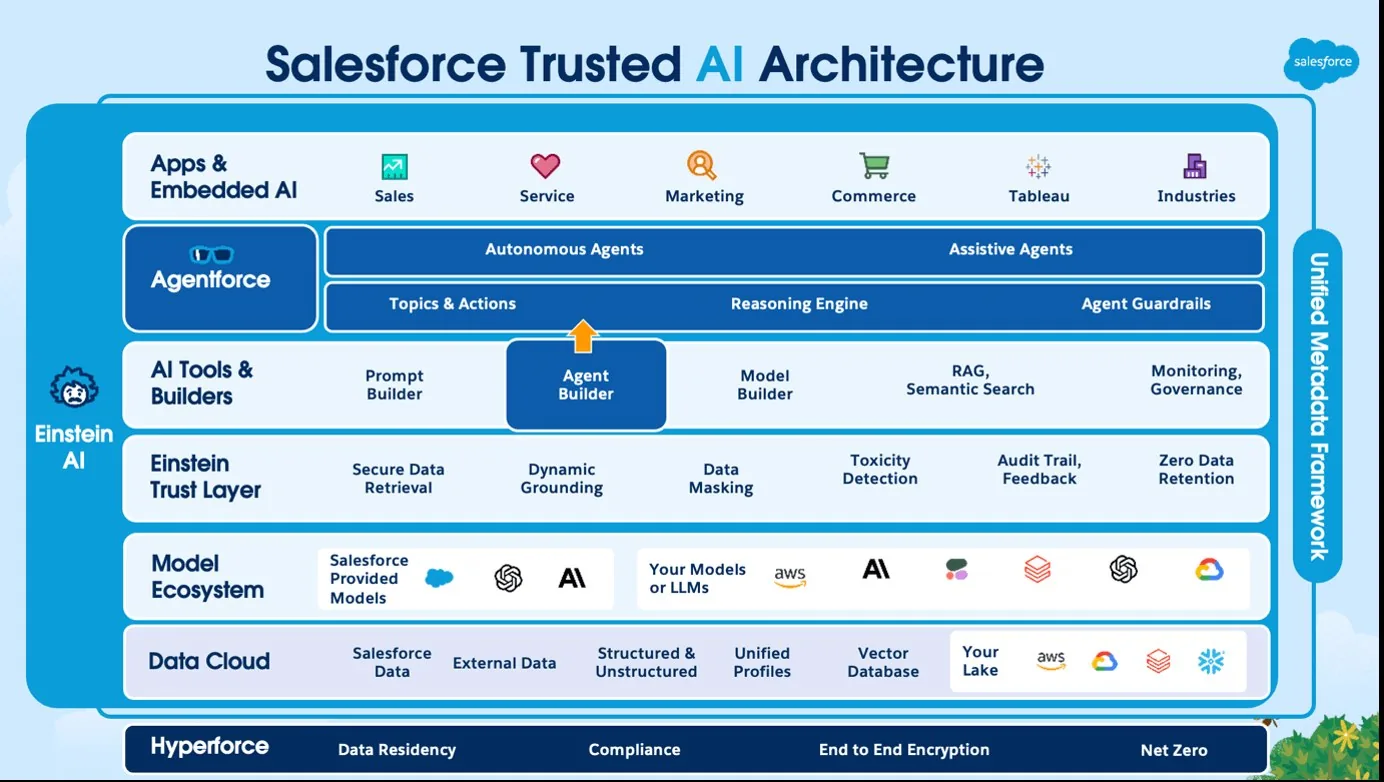
The trust story has three layers, often conflated: platform security (agents can't see or touch what their user context can't), the Trust Layer (masking, zero-retention model handling, toxicity detection, audit trails), and your guardrail design — topics, instructions, and deterministic paths for regulated steps. The first two ship with the platform. The third is where implementations succeed or fail, and it's the one you're actually buying from a partner.
What agents do, role by role
The Workforce
Customer service agents
Resolve routine cases end to end — order status, returns, account questions — grounded in your knowledge, deflecting the volume that burns out human queues. The classic Service Cloud console is unchanged; deflection and console-side assist are additive. Escalations arrive with transcript and context, never “please repeat all that.”

Sales & revenue agents
Qualify inbound leads conversationally, draft quotes validated against CPQ rules, and keep the CRM current without rep data entry. Paired with Agentforce Revenue Management (Revenue Cloud's successor), agents work the quote-to-cash middle: quoting, contract verification, order creation, invoicing — on a catalog modeled cleanly first.

Field service agents
Agentforce Field Service pairs your existing optimization engine with agents that fill schedule gaps from cancellations, brief technicians en route (customer history, asset, likely parts), give dispatchers plain-language control, and write post-work summaries. Industry research says almost half of appointments don't go as planned — most causes live in configuration agents can now work around.

Document & contract agents
Our signature pattern, nobody else's: agents that trigger Nintex DocGen for quotes, letters, and contracts, route them for signature, and file them — with Redlining Manager closing the negotiation loop. The document layer is where our 16 Nintex certifications compound with the agent layer.

Employee-facing agents
IT and HR service desks, executive assistants, policy questions — agents that answer from governed data in the tools employees already use. The highest-adoption agents we deploy, because nobody has to remember to open anything new.

Marketing & engagement agents
Segment-aware campaign assistance, SDR-style follow-up, and event engagement — including the KemiCard wallet-pass patterns we run at Salesforce community events across North America.
Where people meet agents: Slack, Voice, and every channel
SurfacesMost AI rollouts fail at adoption, not capability. The highest-leverage design decision in an agent program is putting agents where work already happens.
Slack: the agentic front door
Salesforce positions Slack as the agentic OS of Agentforce 360: Salesforce channels connect conversations to CRM records; agents work as teammates — notifying stakeholders, drafting content, updating records from the channel; and open APIs plus MCP let agents from across the industry live in the same surface. One home for your agents beats five portals nobody opens.
Voice: the phone tree, retired
Agentforce Voice replaces IVR with natural conversation — connected to your telephony over SIP, grounded in your data, taking real actions (booking, payments through compliant flows, record updates) and escalating with transcript and sentiment attached. Voice is the least forgiving channel; it gets our strictest testing discipline.
The rebrand, decoded — for classic cloud buyers
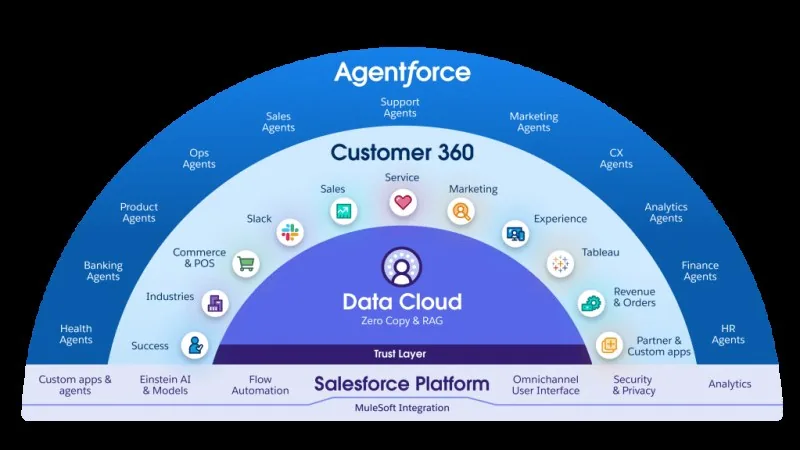
NamingNaming note. In late 2025 Salesforce reorganized its portfolio around the Agentforce 360 brand: Service Cloud became Agentforce Service, Field Service became Agentforce Field Service, and Revenue Cloud became Agentforce Revenue Management. Same platforms, new names, agents built in — and the skills that ran them for years still run them now.
If you came looking for Service Cloud, Field Service Lightning, or Revenue Cloud help: you're in the right place, and so are your existing licenses and skills. The platforms continue; agents are additive. Our Salesforce consulting pillar covers the classic implementations in depth — this page covers what the agent layer adds on top.
Agents for your team — and agents for your customers
Two audiences, one platformThe same Agent Builder produces both. The difference is who the agent talks to and how much autonomy it has earned.
Internal: employee-facing
HR & IT helpdesk — resolves password resets, PTO questions, and policy lookups end-to-end; routes only true exceptions to a person.
Sales ops copilot — summarizes pipeline, drafts renewal proposals, and flags at-risk deals before the forecast call.
Admin copilot — builds and explains Flows from a plain-language request, lowering the bar to extend the org safely.
External: customer-facing
Service resolution agent — closes routine cases on web and WhatsApp without a queue: order status, returns, account changes.
Commerce concierge — guides product selection and post-purchase support in one conversation.
Inbound SDR — qualifies leads, answers product questions, and books time on a rep’s calendar directly.
How agents reach your systems: API, MCP, or A2A
Integration patternsSalesforce doesn’t force one integration style, and most enterprise rollouts end up using all three — chosen per use case, not by habit.
API — custom-coded, tightly controlled
Apex or Flow wraps an existing endpoint by hand. Right when the integration already exists, you need bulk throughput, or the data is sensitive enough to want explicit access control.
MCP — self-describing, auto-discovered
An MCP server exposes its own tools and schemas; the agent discovers them at run time. No wrapper code — and new tools appear without a Salesforce release. Salesforce has announced 35+ AgentExchange partners publishing MCP servers, including AWS, Stripe, PayPal, Box, and IBM.
A2A — delegated to another agent
Agent2Agent is an open, Linux Foundation-backed protocol: agents publish an Agent Card describing what they can do; other agents discover it, authenticate over OAuth 2.0, and hand off a whole sub-task — across vendors, not just across Salesforce orgs.
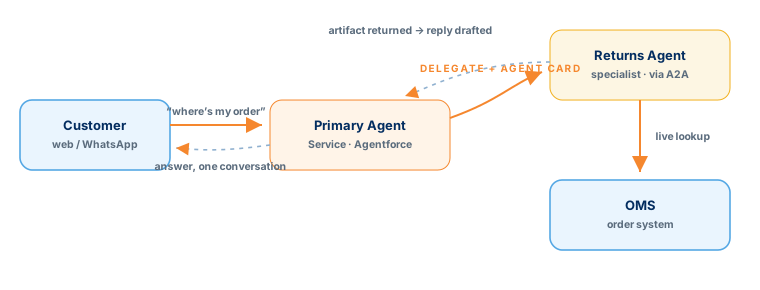
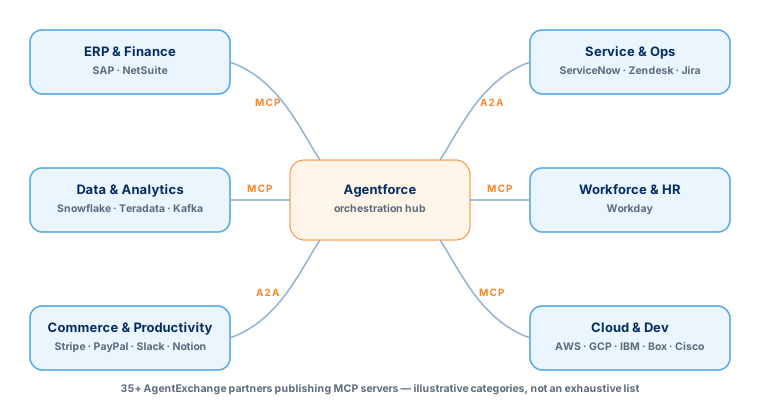
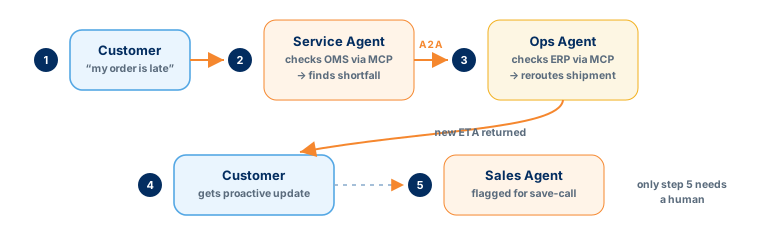
In practice: a customer asks a service agent “where’s my order?”; the agent checks the order system over MCP, finds a shortfall, delegates rerouting to an ops agent over A2A, and replies with the new ETA — five systems, one conversation, and only a save-call at the end needs a human:
Integration architecture is its own discipline; ours lives at Salesforce integration services.
Already in production — the published numbers
Proof, not promisesTrustpilot
+36% win rate, support backlog down 99%, after unifying customer data behind sales and support agents.
Uber Advertising
+60% lead conversion; ad-sales RFP processing accelerated 83% with a lead-engagement agent.
Moody’s Analytics
+20% more meetings booked per rep, with service agents surfacing revenue opportunities mid-interaction.
SaaStr
$2.7M in closed pipeline from agentic outreach across 20+ unified sales agents, with 72% email open rates.
SharkNinja
Two $3B consumer brands unified onto a single agent platform for shopping and post-purchase support.
Yours
Your org’s version of this section is what a Foundation-phase pilot exists to produce — a measured, visible win in one high-volume process.
Source: publicly published Salesforce Agentforce customer stories. Results are those customers’ reported outcomes, not a promise of yours.
Timeline, honestly
Faster than a re-platform, slower than a demoThe four-week promise in the ads assumes clean data and existing integrations. What actually drives duration:
Quick start — days to 5 weeks
One prebuilt-template agent, one use case, minimal integration. A proof of concept — not a production rollout.
Standard rollout — 3–5 months
One or two production agents, reasonably clean data, core integrations via API or MCP. Most first engagements land here; our 90-day pilot is scoped to prove the first one inside this window.
Enterprise scale — 8–14 months
Multi-agent, multi-system, A2A delegation, and governance across business units — sequenced in phases, never big-bang.
Where the time actually goes: platform and data readiness (data cleanup is the single most common blocker), agent configuration and prompt engineering, integration build-out (weeks per system — less with MCP than custom API), adversarial testing and guardrails, and adoption. Ranges synthesized from publicly reported Agentforce implementation experience across SI partners; your timeline depends on data readiness and integration scope.
Three horizons, not one launch
The roadmap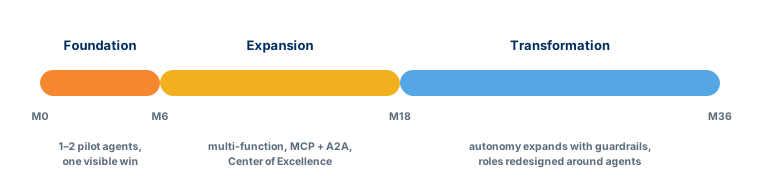
Foundation — months 1–6
Align sponsorship, assess data and governance readiness honestly, and launch one or two pilot agents in a high-volume, forgiving process. The goal is a proven, visible win — not enterprise coverage.
Expansion — months 6–18
Scale across functions, connect agents to each other and to core systems via MCP and A2A, and stand up a Center of Excellence so prompts, guardrails, and ownership stay consistent.
Transformation — months 18–36
Agents become part of how the work gets done. Autonomy expands deliberately, guardrails scale alongside it, and roles are redesigned around agent-augmented work.
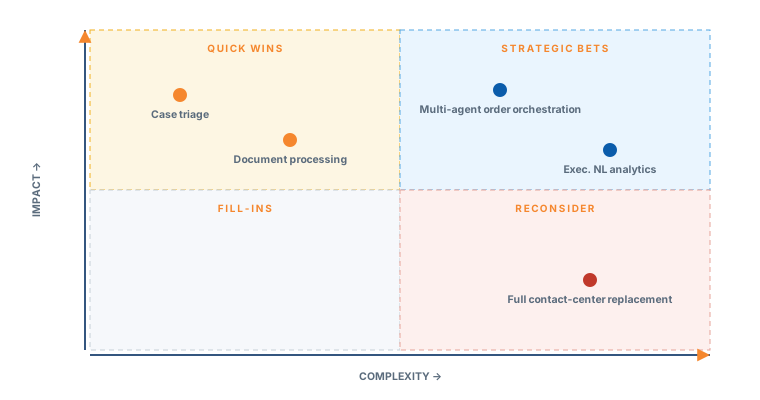
What to build first: look for processes that are high-volume (the win is visible fast), rule-based with exceptions (structured enough for an agent, varied enough to matter), data-intensive (synthesis is the real bottleneck), and handoff-heavy (coordination is the friction). Case triage and document processing sit squarely in that quadrant; a full contact-center replacement does not — and we’ll tell you so.
How we deliver: the 90-day pilot
Engagement- Weeks 1–2 — See. The Horus Eye evidence baseline, use cases ranked by evidence, and one chosen — narrow, measurable, high-volume. Our transformation loop governs every phase.
- Weeks 3–6 — Architect & build. Grounding, permissions, guardrails; deterministic paths for regulated steps; the agent built and adversarially tested — hostile inputs, edge cases, prompt attacks — before any customer meets it.
- Weeks 7–10 — Launch & measure. Production with health monitoring: resolution rate, escalation quality, CSAT, cost per interaction against the baseline.
- Weeks 11–13 — Prove & plan. Measured results against the business case, and an evidence-based scale plan — or an honest recommendation not to scale. Both outcomes are wins; only one is common at other firms.
Certified Agentforce Specialists (earned at Dreamforce 2025), Data Cloud and Revenue Cloud certified, delivering on a platform we've implemented since 2019. Pricing: fixed-price pilots; consumption modeling included so finance sees the cost curve before signing. Run your own numbers in the ROI calculator.
Frequently asked questions
FAQWhat is Agentforce?
Agentforce is Salesforce's platform for autonomous AI agents — digital workers on the Atlas Reasoning Engine that resolve cases, qualify leads, quote deals, and generate documents, grounded in your data and constrained by permissions and guardrails you define.
How much does Agentforce cost?
Pricing is largely consumption-based (Flex Credits per conversation) on top of Salesforce licenses. Kemisoft delivers first agents as fixed-price 90-day pilots with measured outcomes, so cost and value are known before scaling.
Is Agentforce secure enough for regulated industries?
Agents act within Salesforce's existing security model — permission sets, sharing rules, field-level security — and the Trust Layer adds data masking, zero-retention model handling, and audit trails. Real-world safety then depends on topic and guardrail design, which is where delivery discipline matters.
How long until a first agent is in production?
Typical first deployments reach production in about 90 days as a fixed-scope pilot: one narrow use case, deterministic escalation, adversarial testing before launch, and health monitoring after.


Horus is on the case
Meet Horus, the Kemisoft falcon — sharp-eyed, always on, and genuinely excited about a well-built agent. Our practice works the way he does: watch everything, act fast, escalate with full context, never lose the thread.
Horus™ is the Kemisoft falcon — named for the sky-eyed guardian of ancient Kemet.
Your first agent, measured in 90 days
One use case, fixed price, adversarially tested, and honestly reported. That’s how trust gets built — theirs and yours.
Try Horus Eye Scope a Pilot