Horus Eye · Report Card
The report your stakeholders actually read
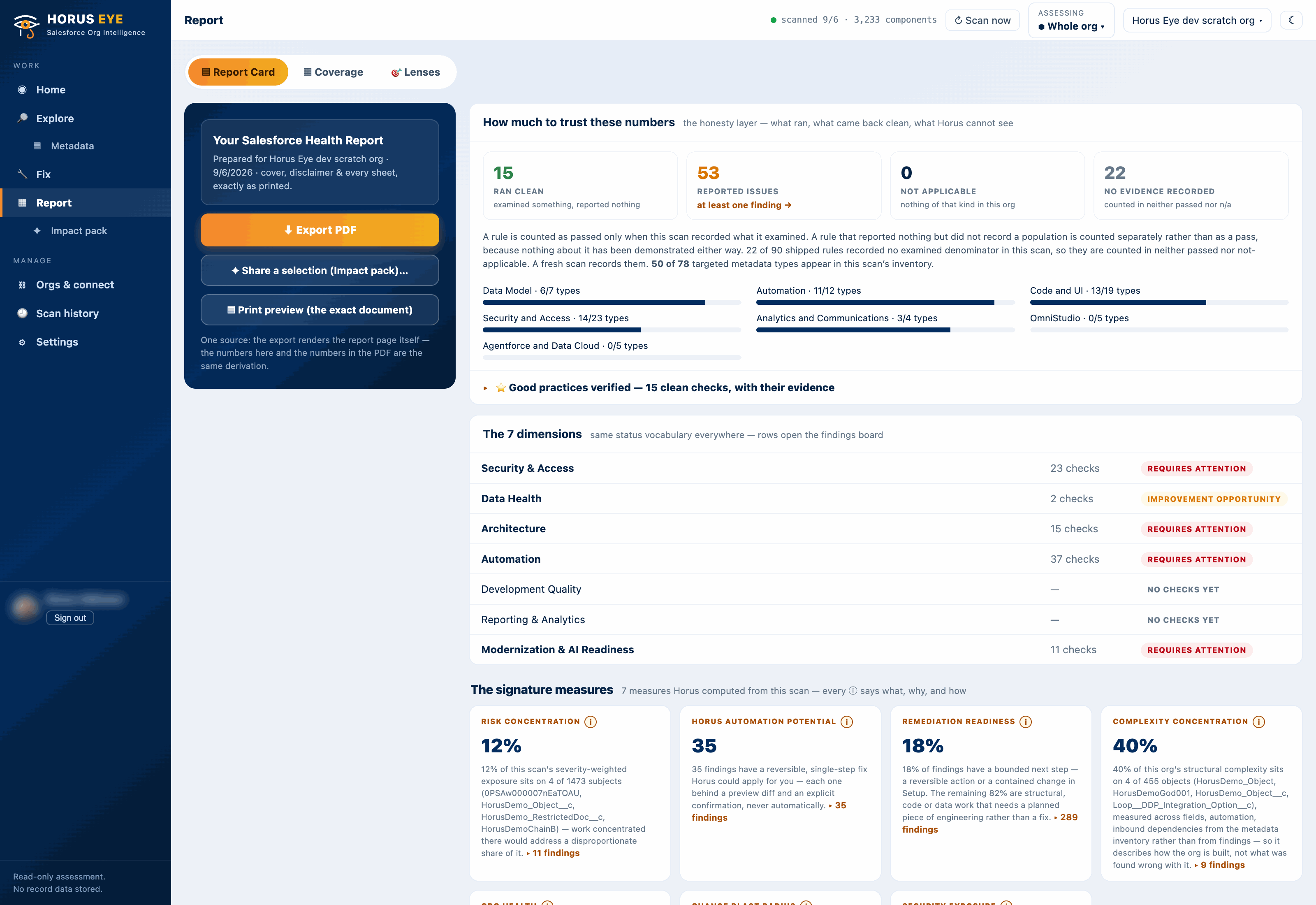
Assessment decks die in inboxes because they are long on findings and short on trust. Horus Eye’s report card is built the other way: a score that explains itself, seven dimensions each showing the checks behind them, a coverage tab that admits what wasn’t examined — and a scan-over-scan trend that proves the clearing actually happened.
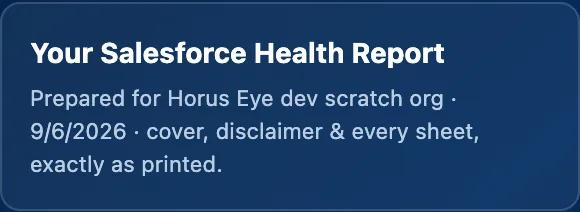
Three promises, one document
How to read itThe report card is the brand promise on paper. See the risk: enterprise exposure, architecture risk, security exposure and change risk — each with the evidence density behind it. Clear the debt: the technical-debt burden, the quick wins that can be cleared now, and the remediation worth sequencing. Protect what’s next: modernization and AI-readiness signals, and a baseline every future re-scan is measured against — so progress shows up as a delta, not an anecdote.
A score that refuses to flatter
How it’s computedThe Estate Health score is severity-weighted exposure measured against the components examined — a density of evidence, not a grade of how the org is run. The construction is honest by design: an assessment area with zero applicable surface is excluded, never scored 100, because a code ring of 100 in an org with no Apex is a statement about an empty set. Dimensions that have no shipped checks say “no checks yet” rather than reading clean — zero checks is not zero findings. And the signature KPIs return null, never 0 or 100, when they cannot be computed: “Risk Concentration: 0%” would be the strongest possible good-news claim from an absence of data.
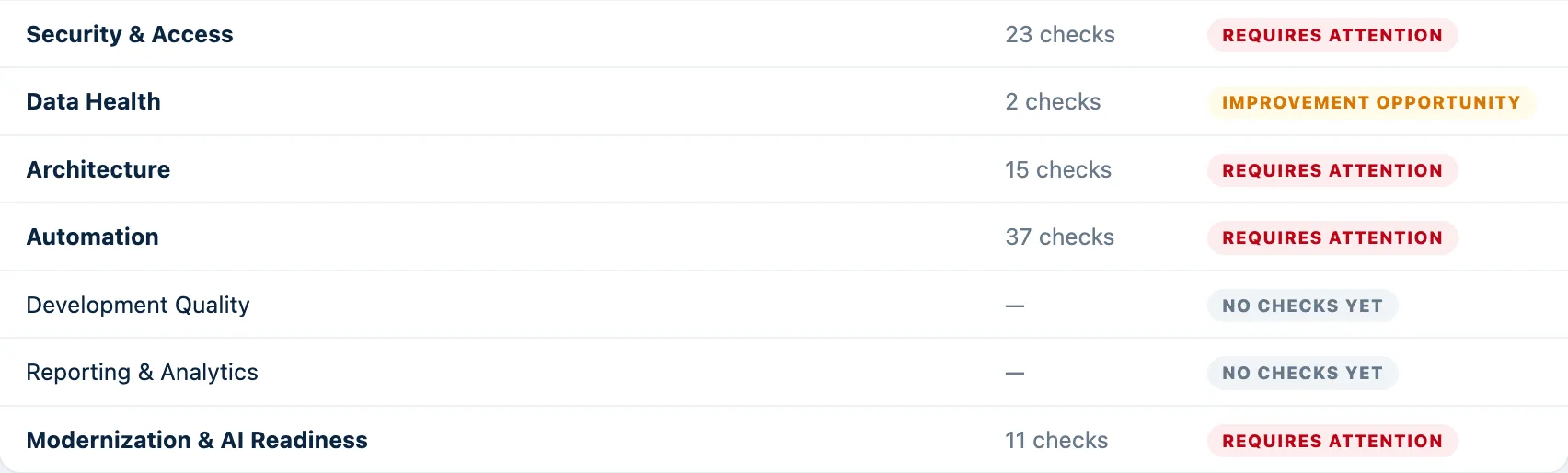
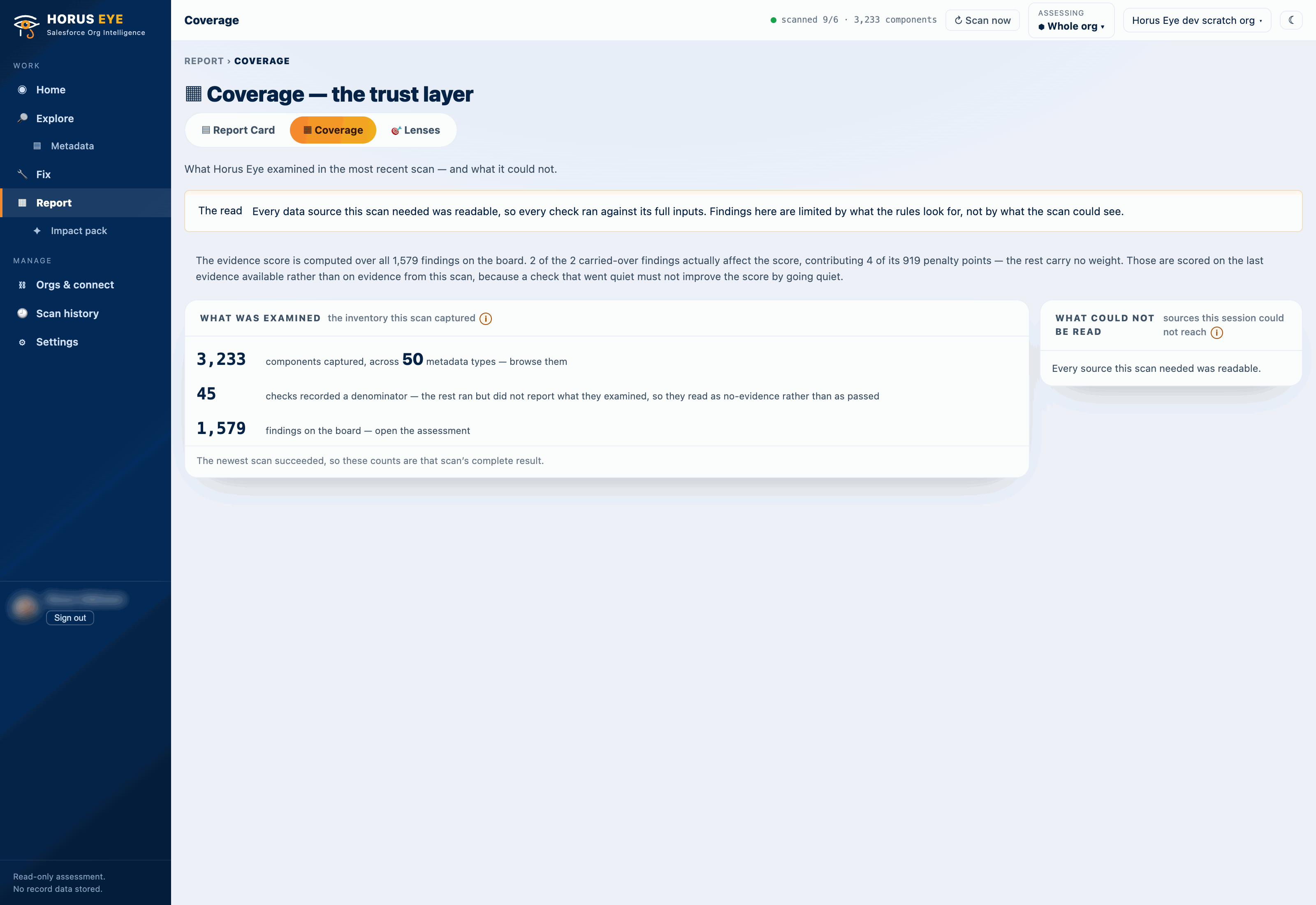
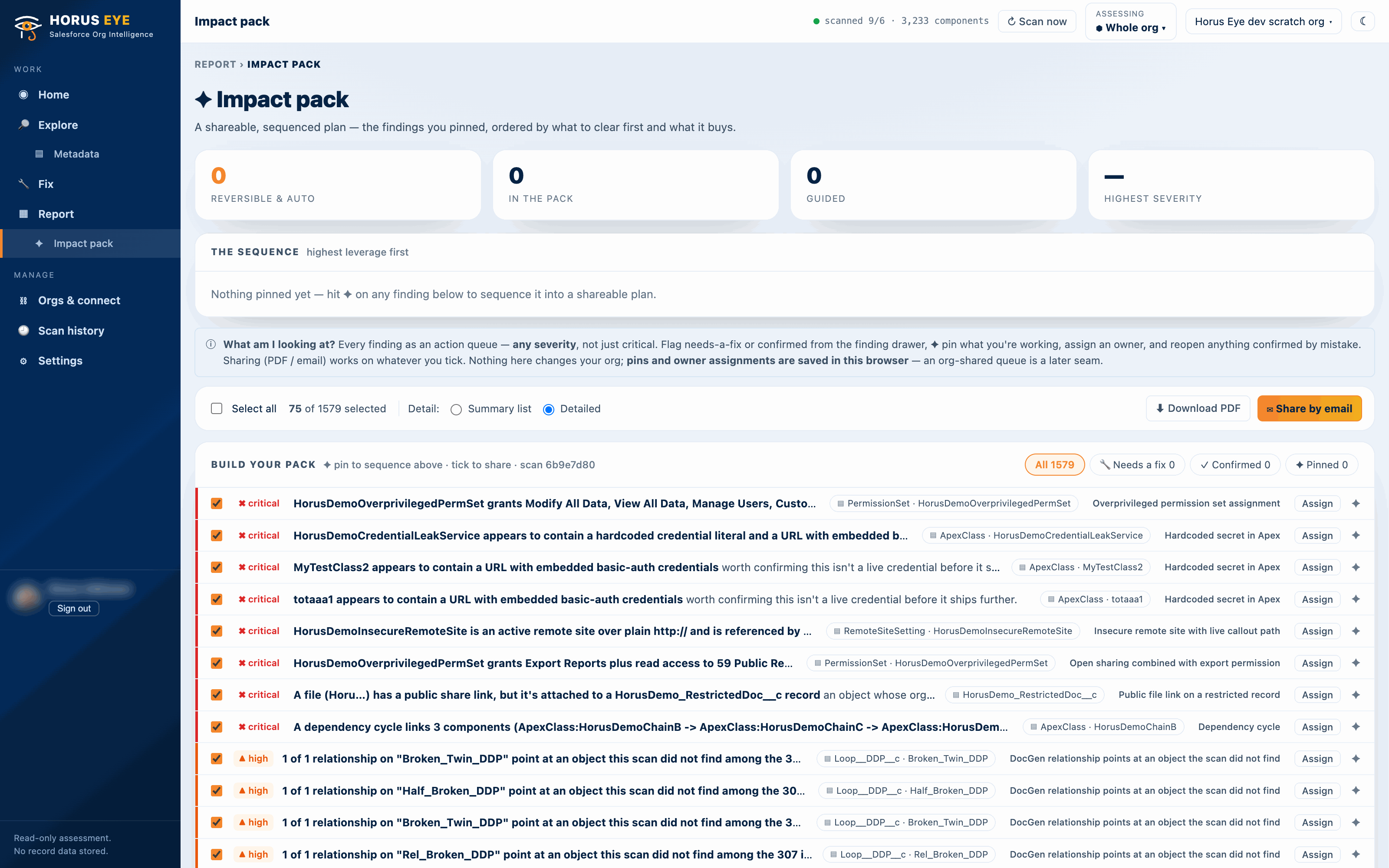
Built to travel: PDF, Impact pack, share links
DistributionExport the branded PDF for the steering committee. Or go narrower and sharper: the Impact pack takes any multi-selection of findings — this quarter’s security items, say — into a stakeholder-ready branded PDF or email. Share links carry the living version. The lenses tab translates the same evidence into the seven business-impact lenses an executive reads; the Now/Next/Later roadmap turns it into sequence.
The trend is the promise kept
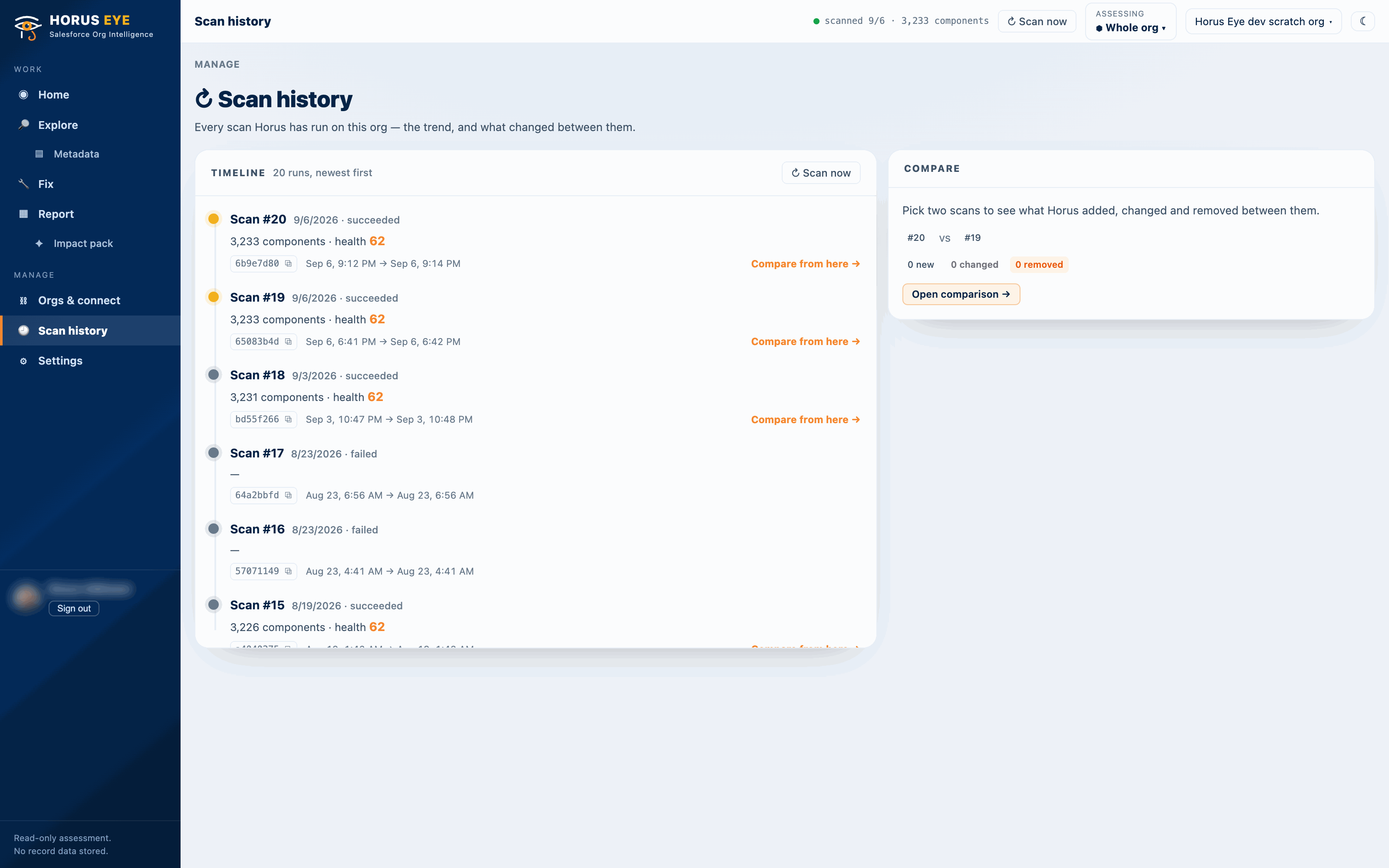
Scan over scan“I found the debt. Let me clear it” is testable: findings are re-checked every scan and clear themselves when the evidence is gone — the re-check distinguishing resolved from still present, but changed. Scan history turns that into the chart your quarterly review wants: the queue shrinking, the score moving, the clearing proven rather than claimed.
Protected AI — the Trust Layer
Every AI read in Horus Eye is metadata-first: built from an allowlist, sanitized by pattern, made through one audited gateway and checked by an output firewall on the way back — and AI is off by default, per org. Every request carries an audit id and an AI Data Scope manifest you can open.
Put a report in front of them that survives questioning
Score with its coverage, findings with their evidence, roadmap with its sequence — exported in an afternoon, proven at the next scan.
Try Horus Eye Get Your Salesforce Report Card All Horus Eye pages