Enterprise Integration
Salesforce integration services built for the day something breaks
Every Salesforce org lives or dies by its connections — to the ERP, the billing system, the data warehouse, the identity provider. As your Salesforce integration partner, we deliver Salesforce SAP integration, ERP integration, and API integration the enterprise way: API-led, error-handled, reconciled, and owned. Because a quote that loses its discount between systems isn't an edge case; it's a resignation letter from your CRM's credibility.
What we build
The PracticeSalesforce–SAP & ERP integration
Orders, invoices, products, and customers flowing both ways with complete field mappings and reconciliation reports finance runs monthly — the quote-to-cash connective tissue behind our Revenue Cloud practice.
MuleSoft consulting
API-led connectivity done as intended: system, process, and experience APIs, reusable assets, and governance — from architects who've run MuleSoft in multi-year enterprise programs.
Open API & platform integration
When MuleSoft is more than you need: platform events, change data capture, REST/Bulk API patterns, and middleware-free designs chosen deliberately — with the trade-offs written down.
Error handling & monitoring
Idempotent design, dead-letter queues someone actually watches, alerting that names an owner, and runbooks for the 2 am scenario. The difference between an integration and a liability.
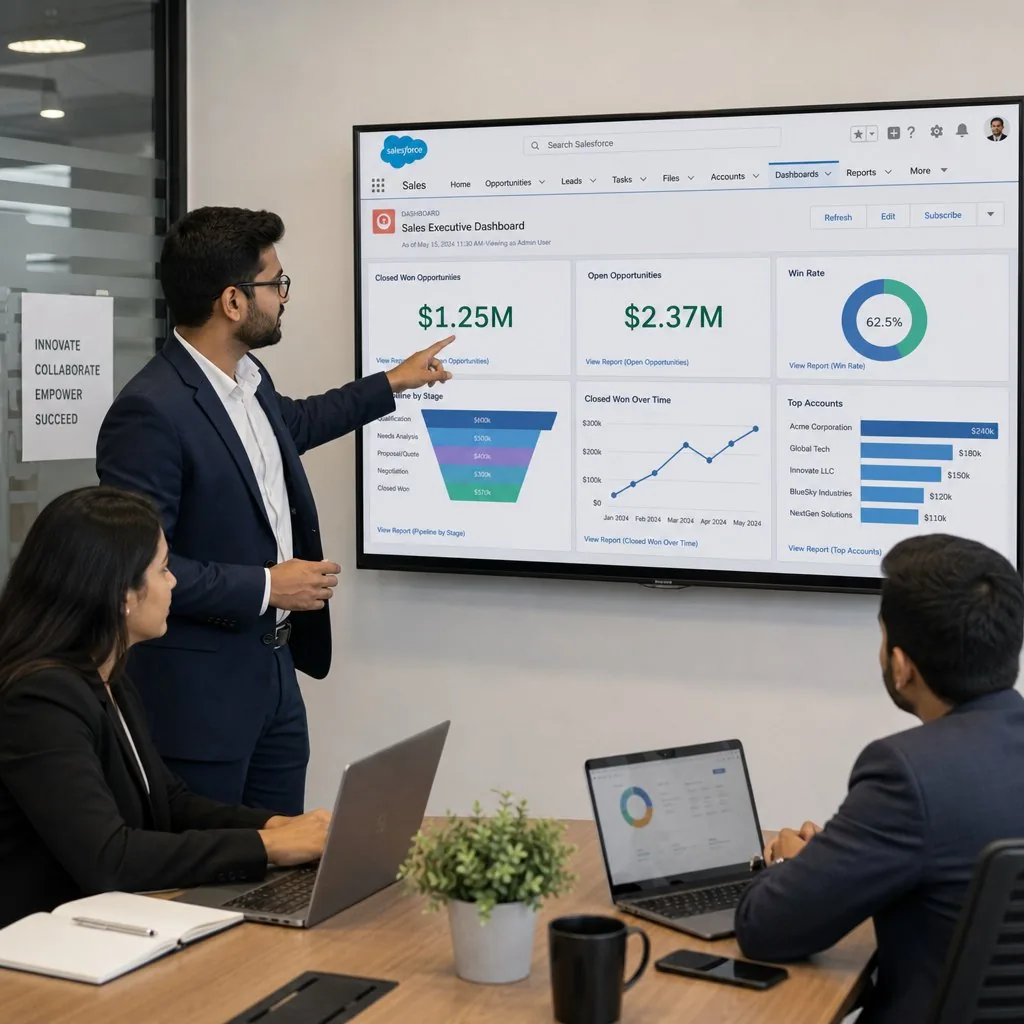
Integration is an architecture decision, not a task
Point-to-point connections added one deadline at a time become the spaghetti that makes every future project cost 30% more. Our integration work starts from the enterprise map — what talks to what, who owns each contract, where the data of record lives — because the architecture-before-automation principle applies nowhere more literally. And with agents now acting across systems, integration quality has a new stake: an agent is only as trustworthy as the APIs it calls.
Choosing the pattern: an honest decision table
Architecture| Situation | Reach for | Because |
|---|---|---|
| Many systems, reuse matters, IT owns integration | MuleSoft API-led | System/process/experience layering pays compound interest at enterprise scale |
| Salesforce-centric events, modest volume | Platform Events / CDC | Native, real-time, no middleware to own |
| Bulk data movement on a schedule | Bulk API + orchestration | Optimized for volume; the pattern nightly loads actually need |
| One SaaS-to-SaaS connection, standard objects | Vendor connector | Buying beats building — until requirements outgrow it, which we'll tell you honestly |
The trap isn't picking a wrong tool; it's picking a different tool every deadline. We document the decision and the reasons — so the next architect inherits a map, not archaeology.
Integration governance: the part nobody budgets
Every integration needs an owner, a contract, and a dashboard. Owner: a named human accountable when the queue backs up — not "the team." Contract: field mappings and error behavior written down, versioned, and honored by both sides. Dashboard: failures visible before finance finds them in a reconciliation. This is governance in the assessment's sense: unglamorous, checkable, and the difference between an integration estate and an incident generator. With agents now calling APIs autonomously, the standard rises again — an agent is only as trustworthy as the API it calls.
Frequently asked questions
FAQDoes Kemisoft integrate Salesforce with SAP and other ERPs?
Yes — CRM-to-ERP integration is core practice: SAP, and the ERP/billing systems around quote-to-cash, built with MuleSoft or Open API patterns, complete field mappings, and reconciliation finance can actually run.
Is Kemisoft a MuleSoft partner?
Our architects carry MuleSoft certification and have delivered MuleSoft-based integration architecture in enterprise programs — API-led connectivity, reusable assets, and governance.
What makes an integration 'enterprise-grade'?
Error handling that assumes failure, queues that are actually watched, idempotent design, complete field mappings, documented ownership, and monitoring — the unglamorous layer that determines whether the CRM is trusted.
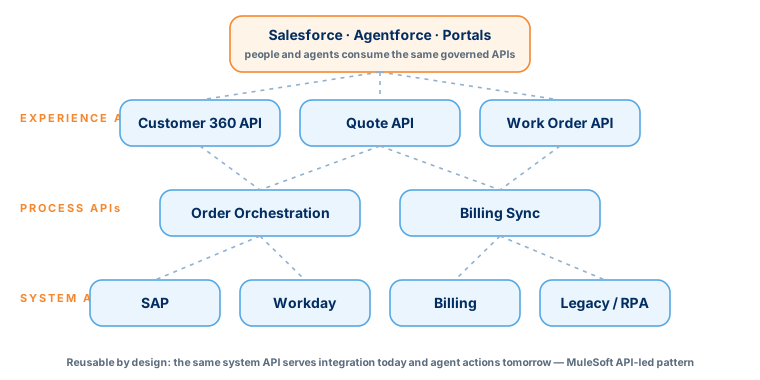
What does API-led Salesforce integration architecture look like?
How should Salesforce integrate with SAP?
The pattern that survives audits: a system API wrapping SAP (IDoc/BAPI/OData behind a clean REST contract), a process API owning orchestration logic (order splits, error queues, retries), and experience APIs shaped for each consumer. Real-time where money moves (orders, credit checks), near-real-time events for status, batch for bulk sync. The anti-pattern we're hired to fix: point-to-point middleware scripts that nobody dares touch. The same architecture serves Workday (HR-driven territory and user provisioning) and Oracle.
Do we need MuleSoft, or are native APIs enough?
Honest answer: not always. A single integration with modest volume can run on platform APIs and events. MuleSoft earns its license when you have three-plus systems, reuse ambitions, or governance requirements — we recommend by fit and have built both ways.
How do AI agents change integration requirements?
Agents act through APIs, so integration quality becomes agent capability: governed authentication, rate controls, and clean contracts stop being plumbing and become the ceiling on what your digital workforce can do.

Where the systems shake hands
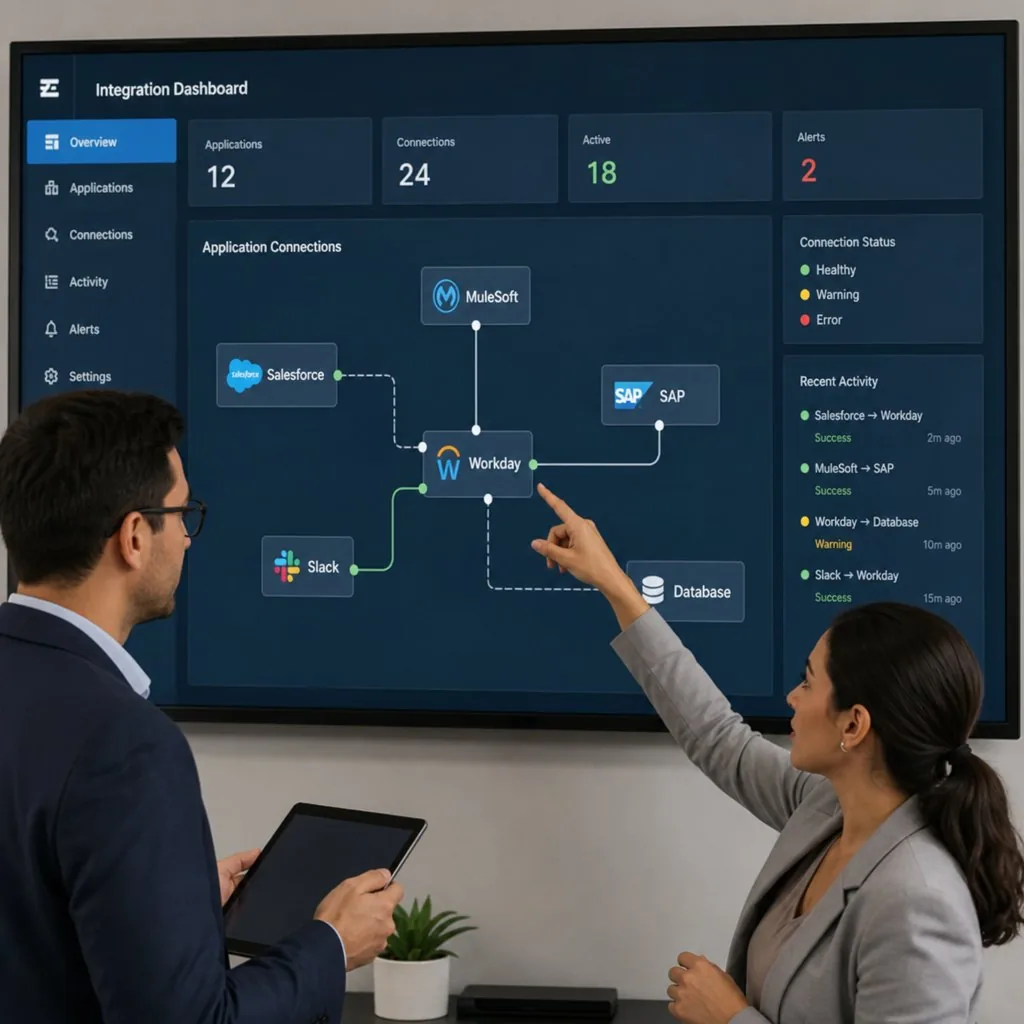
Integration is quiet work — Horus at the laptop, MuleSoft and APIs humming, error queues actually watched. The unglamorous layer everything depends on.
Horus™ is the Kemisoft falcon — named for the sky-eyed guardian of ancient Kemet.
Connect Salesforce with your enterprise
An integration architecture review against your real system map — patterns, gaps, and a sequenced plan.
Try Horus Eye Talk to the Architect