Salesforce is a robust platform capable of transforming how you manage customer relationships, streamline sales pipelines, and drive revenue growth. However, unlocking its full potential is rarely as simple as purchasing user licenses and having your team log in. Without specialized knowledge, many companies find themselves struggling with low user adoption, messy data silos, and complex workflows that hinder rather than help. That is why the strategic decision to hire a Salesforce expert is one of the smartest investments your business can make.

Whether you are planning a complex Salesforce implementation from scratch, migrating from an older legacy system, or simply need ongoing optimization, bringing the right talent on board ensures your system aligns perfectly with your specific business goals. As the platform continually evolves with new capabilities and integrations, relying on untrained novices is a risk you cannot afford. Let’s explore the top reasons to bring in a dedicated specialist, the various ecosystem roles available, and exactly how to navigate the hiring process for maximum success.
One of the primary reasons to bring in a professional is maximizing Salesforce ROI through professional services. A customized platform does much more than merely store contact details; it automates tedious manual tasks, provides deep analytics, and scales effortlessly. Comprehensive Salesforce services bridge the gap between out-of-the-box features and your unique operational needs, ensuring that every dollar spent on software yields tangible business results.
Over time, organizations without dedicated technical oversight often accumulate messy code, redundant background processes, and outdated configurations. A seasoned professional excels at identifying gaps in CRM technical debt and cleaning up your system architecture. Technical debt slows down system performance and frustrates daily users, leading to a drop in productivity. By deploying tailored salesforce solutions, experts ensure your org runs efficiently, remains highly secure, and avoids future performance bottlenecks.
Furthermore, having reliable, dedicated Salesforce support means your sales and service teams never experience prolonged downtime. A specialist can rapidly troubleshoot unexpected errors, build intuitive, role-specific dashboards, and provide hands-on user training. This comprehensive support structure allows your internal teams to focus their energy entirely on what they do best—closing deals, nurturing critical leads, and serving customers excellently.
Understanding the Salesforce Ecosystem: Who Do You Need?
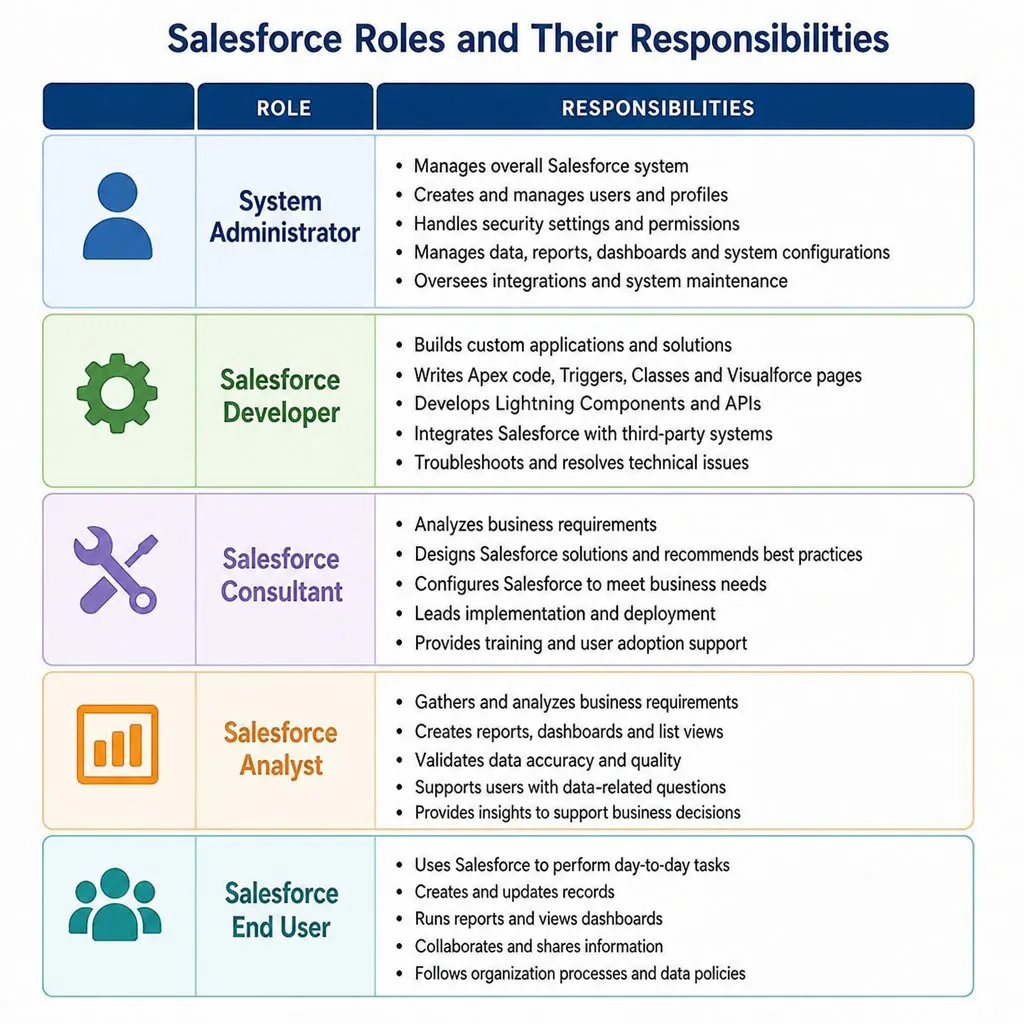
The Salesforce talent pool is vast, and understanding the nuances of different roles is critical before you begin recruiting. When you decide to build out your team, you must first decipher the Salesforce certified administrator vs developer roles. An administrator focuses on declarative, point-and-click configurations, comprehensive user management, security settings, and building custom reports or dashboards. Conversely, a Salesforce developer handles advanced programmatic tasks, using complex code like Apex, SOQL, and Lightning Web Components to build custom features that go well beyond standard declarative capabilities.
Beyond admins and developers, you will frequently encounter the difference between functional and technical consultants. A functional Salesforce consultant bridges the gap between your core business requirements and the system's inherent capabilities. They excel at mapping out workflows, optimizing user journeys, and gathering stakeholder requirements. A technical consultant, however, takes those workflows and translates them directly into technical architecture and functional code.
If your enterprise requires a multi-cloud strategy involving Sales Cloud, Service Cloud, Marketing Cloud, and external integrations, you must know exactly what to look for in a Salesforce architect. An architect is a big-picture thinker with deep technical knowledge and extensive enterprise deployment experience. They ensure the entire integrated system is highly scalable, secure, and integrated seamlessly with your other enterprise applications via tools like MuleSoft or REST APIs. Finding a specialized architect who understands custom Salesforce development lifecycle management guarantees that your system is built sustainably from day one, avoiding structural failures down the line.
The Financial Equation: In-House vs. Outsourced

Available budget often dictates your ultimate hiring strategy. One of the biggest structural debates business leaders face is choosing between managed services vs internal Salesforce staff. Hiring a full-time, in-house team provides dedicated focus and deep internal company knowledge, but it comes with high overhead costs. You must rigorously account for competitive salaries, comprehensive healthcare benefits, hardware, and the continuous training required to keep their certifications current.
Alternatively, exploring the benefits of outsourcing CRM implementation often reveals a much more flexible and cost-effective path. Outsourcing to a reputable consultancy gives you on-demand access to an entire team of specialists—ranging from basic data admins to high-level system architects—for a fraction of the cost of hiring them all individually full-time. This model allows you to scale resources up or down seamlessly based on your immediate project needs.
If you only need short-term help or have a highly specific, one-off project, you might consider independent contractors. However, you must carefully weigh the cost of hiring freelance Salesforce developers. While freelance hourly rates can sometimes appear lower than full agency fees, freelancers require more direct oversight from your internal management team. Without strong internal leadership to actively guide them, timelines can easily slip, and budget overruns become common. Implementing strict Salesforce project management best practices—such as Agile methodologies, daily stand-ups, and very clear sprint goals—is vital to keep outsourced or freelance teams perfectly aligned with your core business objectives and tight deadlines.
How to Find and Vet the Right Salesforce Talent
Whether you are actively looking for an individual full-time hire or a consulting agency to strategically partner with, finding top-tier talent requires a strategic approach. There are several common mistakes when recruiting Salesforce talent, such as prioritizing generic IT experience over platform-specific technical knowledge, or focusing solely on finding the lowest hourly rate rather than focusing on long-term strategic value and ROI.
If you are planning on partnering with an external agency, clearly understanding how to vet Salesforce consulting partners is crucial for a smooth, successful deployment. Look very closely at their specific Salesforce implementation partner selection criteria. Do they have a proven track record of experience within your specific industry? Do they offer comprehensive post-launch training and ongoing managed support? A reliable partner will prioritize end-user adoption and change management just as much as they prioritize the initial technical deployment.
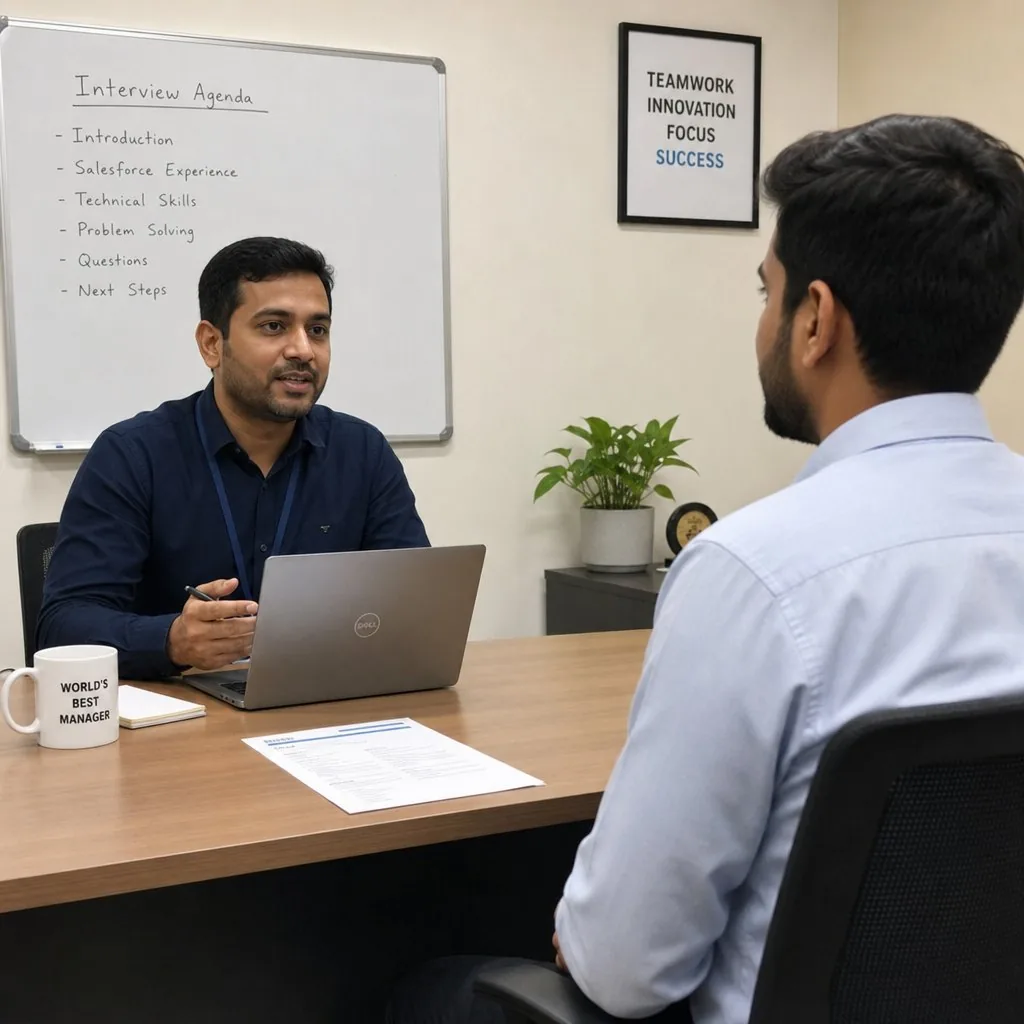
When interviewing individual candidates, evaluating technical expertise in Salesforce interviews must go far beyond asking for basic textbook definitions. Present candidates with real-world scenarios that your company currently faces and ask exactly how they would architect a functional solution. Do they default to writing custom Apex code, or do they strive to leverage standard, out-of-the-box features like Flow first? A true platform expert knows that custom code should always be a considered last resort to minimize future maintenance headaches.
Additionally, while official certifications are important, they do not tell the whole story of a candidate's overall capabilities. A critical step in the standard hiring process is validating Trailhead certifications and project experience. Trailhead is Salesforce’s interactive online learning platform, and while accumulating badges demonstrates a strong commitment to continuous learning, practical, hands-on project experience definitively proves they can handle the unpredictable complexities of a live business environment. Ask potential candidates to walk you through a challenging project, the specific technical obstacles they faced, and the precise steps they took to successfully overcome them.
Actionable Tips for a Successful Salesforce Engagement
To ensure your significant CRM investment completely pays off, keep these actionable tips in mind when you hire a Salesforce expert:
Define Your Specific Goals Clearly: Long before writing a job description or signing an expensive agency contract, clearly document exactly what you want your CRM to achieve. Do you want to reduce customer response times, seamlessly automate lead scoring, or integrate complex external data sources?
Prioritize Clear, Open Communication: Deep technical skills are vital, but your chosen expert must also possess the soft skills required to easily explain complex technical concepts to non-technical stakeholders and C-suite executives.
Plan Diligently for the Long Term: A robust CRM ecosystem is never truly "finished." Whether you utilize an external managed services model or rely on an in-house admin, you must plan for ongoing system maintenance, periodic security health checks, and continuous optimization based on direct user feedback.
Demand Thorough System Documentation: Ensure your chosen expert documents all custom platform configurations, automation flows, and custom code lines. This best practice makes future platform updates easier and protects your vital business operations if the expert eventually leaves for another professional opportunity.
Conclusion
A properly configured Salesforce environment acts as the central nervous system of your business. It accelerates sales cycles, enhances customer satisfaction, and provides invaluable data insights that drive strategic decision-making. However, to harness this power, you need the right experienced guide. By taking the time to fully understand the different ecosystem roles, carefully evaluating your financial hiring options, and thoroughly vetting candidates or agency partners, you set your entire organization up for sustainable, long-term success. Don’t let your CRM platform become a costly source of frustration—invest in specialized talent today and watch your business thrive in a highly competitive market.