Every scaling organization inevitably hits a digital wall. As you adopt more software applications to manage different facets of your growing business, managing customer data across disconnected platforms quickly becomes an operational nightmare. This is exactly where professional crm integration services step in to completely transform your daily workflow. If your sales representatives are constantly toggling between marketing software, accounting platforms, and email clients just to piece together a single customer profile, your business is actively losing valuable time and revenue.

In this comprehensive guide, we will explore the true crm integration meaning, break down its most powerful operational benefits, and provide you with actionable insights for permanently uniting your software ecosystem.
What Exactly is CRM Integration?
Before we can dive into the strategic advantages, we need to establish a clear crm integration definition. At its most fundamental level, it is the technical process of connecting your Customer Relationship Management software seamlessly with other distinct, third-party applications.
The primary goal is achieving truly integrated customer relationship management, creating a unified digital environment where information flows effortlessly between departments without any manual intervention. Whether you are simply linking a basic customer service ticketing system or implementing complex crm data integration across a massive global enterprise network, a properly connected digital ecosystem acts as the central nervous system of your entire business operations.
Top Benefits of Professional CRM Integration Services
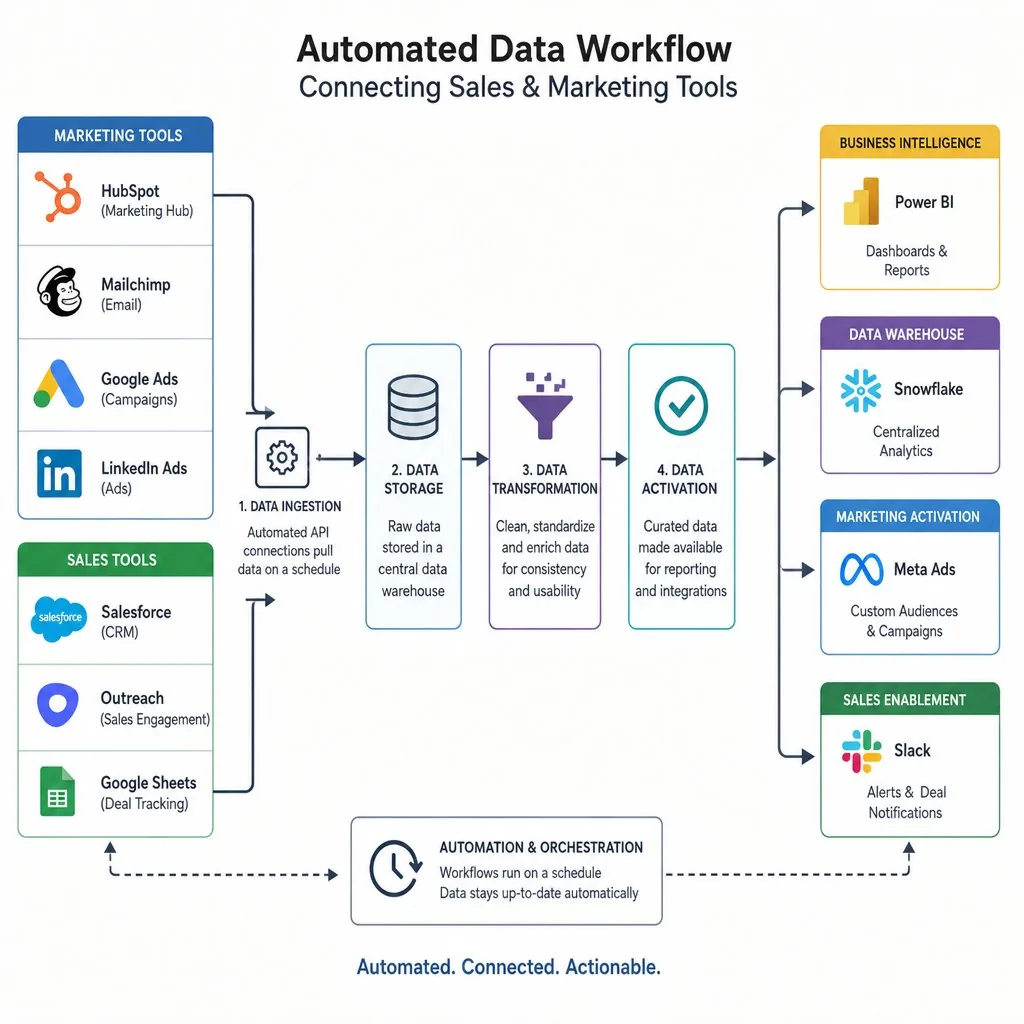
Why should business leaders invest their budget and IT resources into comprehensive crm system integration? Here are the most transformative advantages you can expect when your tools finally communicate perfectly.
1. Eliminating Duplicate Customer Data Entry
One of the absolute biggest productivity killers in any modern organization is manual data entry. When your core software systems are not communicating, your employees are inevitably forced to input identical customer details into multiple separate platforms.
Proper technical integration drastically streamlines your internal operations by eliminating duplicate customer data entry. Once a specific contact record is updated in your marketing software, it immediately and automatically updates inside your central CRM. This completely eliminates costly human data-entry errors and saves your team countless hours of tedious administrative work.
2. Automating Sales and Marketing Workflows
When your digital tools finally talk to each other, you unlock immense operational power. By properly automating sales and marketing workflows, you guarantee that no valuable lead ever falls through the cracks again.
For instance, if a prospect downloads an eBook or whitepaper from your website, an integrated system can automatically notify a dedicated sales representative, assign a priority follow-up task, and seamlessly add that prospect to an ongoing nurture email sequence. This proactive approach dramatically shortens the sales cycle and significantly enhances the overall customer experience by providing immediate, highly relevant engagement.
3. Improving Lead Management Visibility
Siloed organizational information inevitably leads to operational blind spots. When customer interactions are scattered across ten different platforms, tracking the complete buyer's journey becomes impossible.
Strategic data integration shatters these departmental silos, dramatically improving lead management visibility. Your sales teams gain immediate, comprehensive access to a prospect's entire interaction history—from past support tickets to specific website page visits—empowering them to deliver highly personalized and effective sales pitches.
Choosing the Right System Integration Architecture
There is no single universal approach to connecting your software stack. IT leaders and business owners must carefully evaluate several distinct technical pathways based on their operational demands.
Native Integrations Versus Third-Party Tools
Many modern platforms offer basic, built-in connections to popular business applications. When evaluating native integrations versus third-party tools, you must consider your specific operational needs and long-term goals. Native options are usually incredibly quick to set up and highly cost-effective for simple, daily tasks. However, for executing complex, multi-step automated workflows between several apps at once, utilizing specialized third-party middleware platforms often provides the necessary advanced flexibility.
Custom API Development vs Middleware Solutions
For highly unique internal business processes, you will inevitably need to weigh the pros and cons of custom api development vs middleware solutions. Middleware platforms offer a significantly faster, visually driven method to accurately map data fields between varying platforms without writing heavy code.
Conversely, custom APIs provide absolute developmental control and superior long-term scalability, though they require advanced technical expertise and larger upfront budgets. Regardless of the chosen path, adhering strictly to restful api documentation standards is absolutely critical to ensure your internal developers can easily maintain, update, and troubleshoot these technical connections in the future.
Enterprise Service Bus and Real-Time Sync
Large-scale global enterprises managing massive daily data volumes frequently require a highly robust real-time data synchronization architecture to prevent systemic lag and latency. In these highly demanding scenarios, an enterprise service bus deployment (ESB) proves incredibly effective. An ESB serves as a centralized, highly secure communication hub, safely and reliably routing critical business data between your core CRM and dozens of other enterprise-level applications simultaneously.
Overcoming Common Implementation Hurdles

While the organizational benefits are completely undeniable, the journey to a fully connected digital ecosystem is rarely without some friction. So, what are common crm integration challenges that companies face?
The most frequent obstacle is connecting crm to legacy systems. Many established enterprises rely heavily on outdated, custom-built, on-premise software that entirely lacks modern API capabilities. Overcoming this requires highly creative technical workarounds, such as secure database-level file transfers or specialized adapters, to extract historical data without compromising the older infrastructure.
Furthermore, a lack of universal data standardization can derail projects quickly. If your sales department formats international phone numbers completely differently than your automated billing department, an integration will inevitably result in a messy, unusable database. Establishing strict, company-wide data entry standards prior to technical deployment is crucial.
Finally, maintaining strict data security while navigating complex privacy compliance frameworks is an ongoing challenge. Moving sensitive client information between platforms inherently increases the risk of data breaches, making robust end-to-end network encryption utterly essential.
How to Integrate CRM with ERP Systems
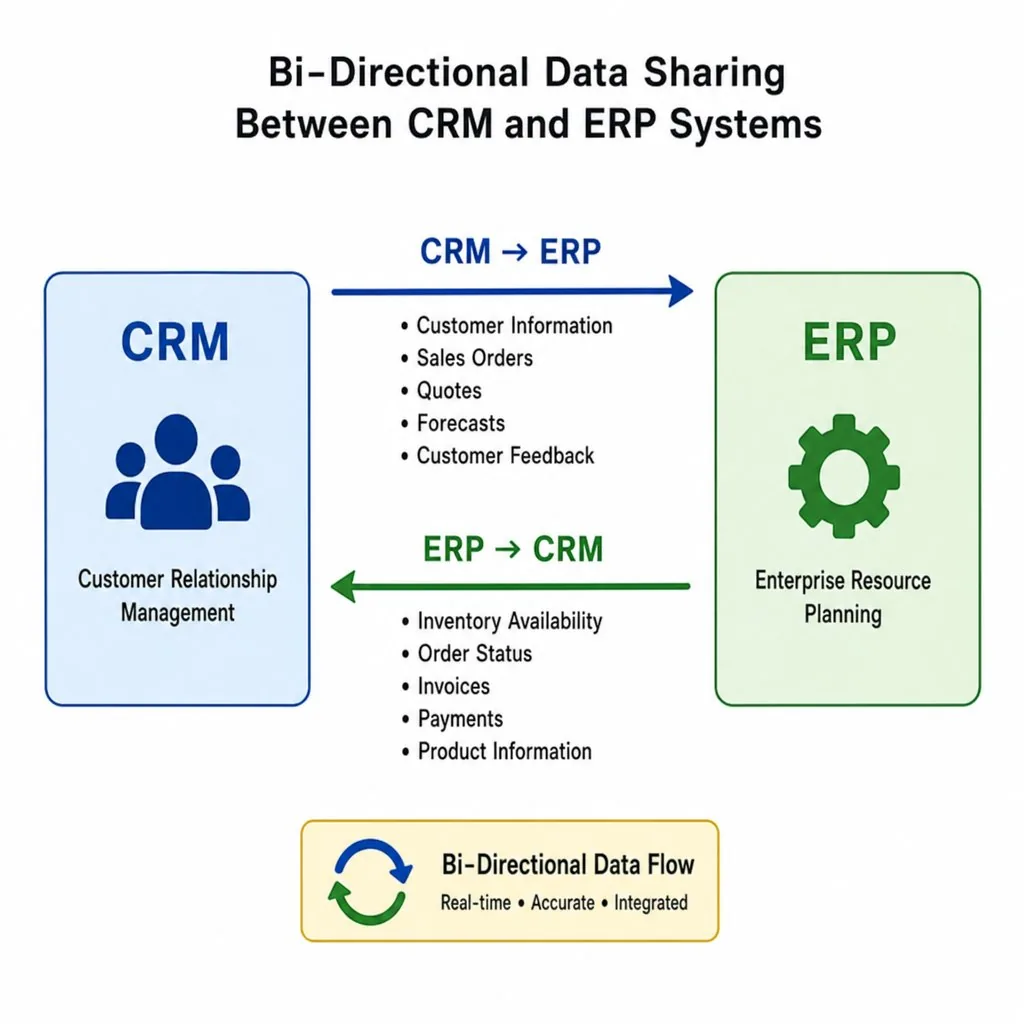
A uniquely frequent and critical challenge for scaling businesses is understanding exactly how to integrate crm with erp (Enterprise Resource Planning) software. This specific technical connection is arguably the most critical initiative a company can undertake, bridging the vital gap between front-office sales generation and back-office financial fulfillment.
When dealing with modern digital architecture, leveraging cloud-based crm platform synchronization makes this daunting process significantly smoother and much more reliable. Secure cloud-to-cloud connections utilize standardized webhooks to keep global inventory counts, dynamic pricing models, and client billing histories perfectly aligned in real-time.
To successfully combine these two massive enterprise systems without disrupting daily business, you need a meticulous, well-documented step by step crm implementation roadmap:
Audit Your Ecosystem: Comprehensively document every single piece of software currently deployed across your company.
Define Clear Triggers: Determine exactly what specific operational actions require automation (e.g., automatically generating an invoice when a deal closes).
Execute Customer Lifecycle Data Mapping: This is an absolutely crucial step. Precise customer lifecycle data mapping ensures that a potential "Lead" in your sales CRM translates completely accurately to a paying "Customer" in your financial ERP without any data corruption or missing fields.
Test Safely: Always utilize a dedicated, isolated sandbox environment to thoroughly test all data integrations before exposing any live client data.
The Value of Choosing a Specialized Integration Partner
Tackling highly complex technical networking hurdles internally can be incredibly overwhelming, especially for companies lacking a massive in-house IT department. This is exactly why choosing a specialized integration partner is very often a strategic game-changer.
An experienced technical agency that provides dedicated crm integration services brings invaluable institutional knowledge to your project. They will accurately consult on structural best practices, verify that your new system architecture remains permanently scalable, and provide crucial ongoing post-launch technical support. By partnering with experts, you guarantee a smooth transition and maximize your return on software investment.
Conclusion
Operating within isolated digital silos is simply no longer a competitive or viable business strategy in today's fast-paced market. By actively embracing comprehensive data integration, you rapidly unlock the absolute maximum potential of your expensive software investments. From seamlessly synchronizing multiple marketing platforms to successfully completing a massive backend ERP connection overhaul, strategic technical alignment empowers your entire workforce to perform much smarter and significantly faster.
Do not let your valuable organizational data remain trapped inside isolated databases. Plan meticulously, consult the right experts, start your seamless integration journey today, and watch your overarching operational efficiency soar to unprecedented new heights.